Sign Material Guide
Safety Sign Materials
Choosing the right material is an important part of selecting a safety sign. While the message and design of a sign are essential for communicating safety information clearly, the material you choose can have a significant impact on the sign's durability, appearance and suitability for its intended environment.
A sign used temporarily on a construction site has very different requirements from one that is permanently installed outside a warehouse, factory or commercial building. Indoor signs may not need the same level of weather resistance as outdoor signs, while signs applied directly to machinery, vehicles or other equipment may require a flexible self-adhesive material rather than a rigid sign.
When choosing a sign material, consider where the sign will be installed, how long it needs to remain in place, the conditions it will be exposed to and how it will be mounted. Choosing the appropriate material can help ensure that your sign remains clear, durable and effective throughout its intended lifespan.
At CSS Signs, our safety signs are available in a range of materials to suit different applications. We manufacture our signs to order, allowing you to select the material and size that best match your requirements.
Use the guide below to compare our signage materials and choose the most suitable option for your application.
Quick Guide
| Material | Thickness | Typical Durability | Best Suited To |
|---|---|---|---|
| Corriboard | 5mm | 12–18 months | Temporary and short- to medium-term signage |
| Aluminium Composite | 3mm | 10+ years | Long-term indoor and outdoor signage |
| PVC | 1mm | 10+ years | Long-term indoor signage |
| Self-Adhesive Vinyl | <0.1mm | 3–5 years | Vehicles, machinery and smooth surfaces |
| Photoluminescent PVC | 1mm | 5–10 years | Emergency and low-light applications |
| Pole-Mounted Aluminium Plate | 2.5mm | 10+ years | Signs mounted on poles |
Safety Sign Materials
Choosing the right material is an important part of selecting a safety sign. While the message and design of a sign are essential for communicating safety information clearly, the material you choose can have a significant impact on the sign's durability, appearance and suitability for its intended environment.
A sign used temporarily on a construction site has very different requirements from one that is permanently installed outside a warehouse, factory or commercial building. Indoor signs may not need the same level of weather resistance as outdoor signs, while signs applied directly to machinery, vehicles or other equipment may require a flexible self-adhesive material rather than a rigid sign.
When choosing a sign material, consider where the sign will be installed, how long it needs to remain in place, the conditions it will be exposed to and how it will be mounted. Choosing the appropriate material can help ensure that your sign remains clear, durable and effective throughout its intended lifespan.
At CSS Signs, our safety signs are available in a range of materials to suit different applications. We manufacture our signs to order, allowing you to select the material and size that best match your requirements.
Use the guide below to compare our signage materials and choose the most suitable option for your application.
Quick Guide
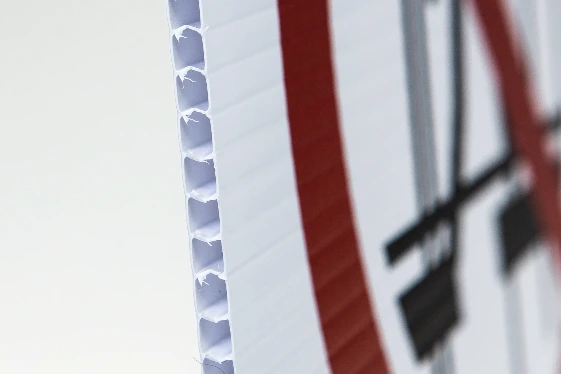
Material: Corriboard
Thickness: 5mm
Typical durability: 12-18 months
Best for: Temporary and short- to medium-term use
Material: Aluminium composite
Thickness: 3mm
Typical durability: 10+ years
Best for: Long-tem indoor and outdoor signage
Material: PVC
Thickness: 1mm
Typical durability: 10+ years
Best for: Long-tem indoor signage
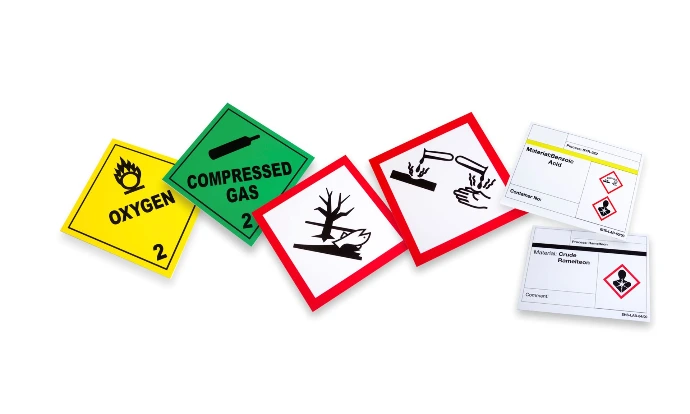
Material: Self-Adhesive Vinyl
Thickness: <0.1mm
Typical durability: 3–5 years
Best for: Vehicles, machinery and smooth surfaces
Material: Photoluminescent PVC
Thickness: 1mm
Typical durability: 5–10 years
Best for: Emergency and low-light applications
Material: Pole-Mounted Aluminium Plate
Thickness: 2.5mm
Typical durability: 10+ years
Best for: Signs mounted on poles
Our Material Range
5mm thick | Typical durability: 12–18 months
Corriboard is a lightweight, practical and economical option for temporary and short- to medium-term safety signage. Its lightweight construction makes it easy to transport, handle and install, making it particularly useful where signs need to be moved, replaced or repositioned regularly.
Corriboard signs are a popular choice for construction sites, temporary work areas, events, temporary hazards and changing site conditions. They can also be useful where signage is only required for the duration of a particular project.
The material is suitable for situations where a sign does not need to remain permanently installed for many years. For long-term outdoor applications, a more durable material such as aluminium composite may be a better choice.
Corriboard is ideal for:
Construction and building sites
Temporary work areas
Temporary hazards and restrictions
Events and temporary facilities
Signs that may need to be moved or replaced
Choose corriboard when: you need a lightweight and cost-effective sign for temporary or shorter-term use.
3mm thick | Typical durability: 10+ years
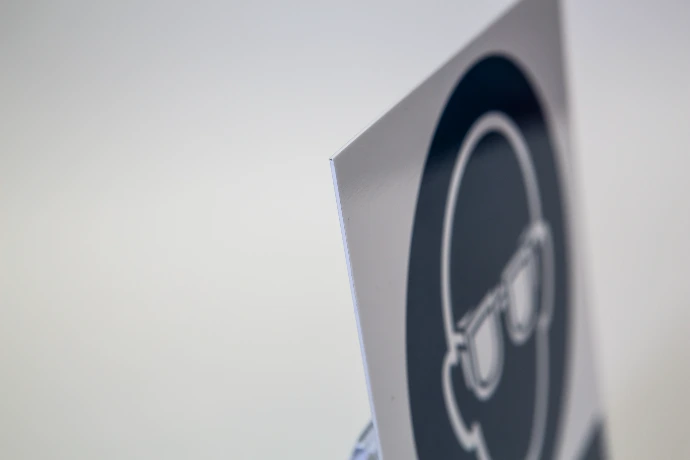
Aluminium composite is a strong and durable option for safety signs that need to remain in place for many years. Its rigid construction makes it particularly suitable for permanent signage and larger signs where additional strength and rigidity are beneficial.
Aluminium composite signs are suitable for both indoor and outdoor applications, including warehouses, factories, construction sites, commercial premises, car parks and external areas. The material provides a more substantial long-term solution than temporary sign materials.
For signs exposed to changing weather conditions, regular handling or demanding environments, aluminium composite is a practical choice where long-term durability is important.
Aluminium composite is ideal for:
Permanent outdoor safety signs
Warehouses and factories
Construction and industrial sites
Commercial premises
Car parks and external areas
Signs that need to remain in place for many years
Choose aluminium composite when: you need a rigid, durable sign for long-term use, particularly outdoors or for larger signs.
1mm thick | Typical durability: 10+ years
PVC is a thin, lightweight rigid material that is well suited to long-term indoor signage. Its slim profile makes it particularly practical for signs mounted on walls, doors and other smooth indoor surfaces.
PVC safety signs can be used throughout offices, warehouses, factories, schools, hospitals, hotels and other indoor environments where a durable sign is required without the additional rigidity or weight of thicker materials.
PVC is particularly suitable for smaller indoor signs where the sign will be permanently installed and does not need the additional weather resistance required for outdoor applications.
PVC is ideal for:
Warehouses and factories
Offices and commercial buildings
Schools and public buildings
Doors and internal walls
Long-term indoor safety signage
Choose PVC when: you need a lightweight, rigid sign for a permanent indoor application.
Less than 0.1mm thick | Typical durability: 3–5 years
Self-adhesive vinyl provides a flexible alternative to traditional rigid safety signs. Rather than requiring separate fixings, the sign can be applied directly to a suitable smooth, clean surface.
This makes self-adhesive vinyl particularly useful for machinery, equipment, vehicles, doors, cabinets and other surfaces where a rigid sign may be difficult to install.
Because the material is thin and flexible, it can also be useful where the sign needs to follow the shape of the surface rather than being mounted as a rigid panel.
For the best results, the surface should be clean, dry and suitable for adhesive application before the sign is installed.
Self-adhesive vinyl is ideal for:
Machinery and equipment
Vehicles
Doors and cabinets
Areas where drilling or mechanical fixing is impractical
Applications requiring a thin, flexible sign
Choose self-adhesive vinyl when: a rigid sign is impractical and the sign can be applied directly to a suitable smooth surface.
1mm thick | Typical durability: 5–10 years
Photoluminescent PVC is ideal for safety signage where visibility in low-light conditions is important. The material absorbs available light and provides a visible glow when normal lighting is reduced.
This makes photoluminescent signage particularly useful for emergency escape routes, fire exits, stairways and other areas where people may need to identify an emergency route or facility during reduced lighting or a power failure.
Photoluminescent PVC is ideal for:
Emergency exit routes
Fire exit signage
Stairways and corridors
Areas where lighting may be reduced
Choose photoluminescent PVC when: the sign needs to remain visible and identifiable when normal lighting conditions are reduced.
2.5mm thick | Typical durability: 10+ years
Pole-mounted aluminium plates are designed specifically for signs that need to be installed on poles or posts. The rigid aluminium plate provides a durable long-term solution for outdoor signage.
These signs include an integrated rear channel and brackets for installation, providing a practical option where wall mounting is not possible or where the sign needs to be positioned independently of a building or other structure.
Pole-mounted signs are particularly useful for traffic management, car parks, assembly points, pedestrian areas, private roads and other external locations where information needs to be clearly visible to drivers, pedestrians or visitors.
Pole-mounted aluminium plates are ideal for:
Car parks
Private roads
Traffic and pedestrian management
Commercial and industrial premises
Choose a pole-mounted aluminium plate when: the sign needs to be installed on a post or pole rather than directly onto a wall or other surface.
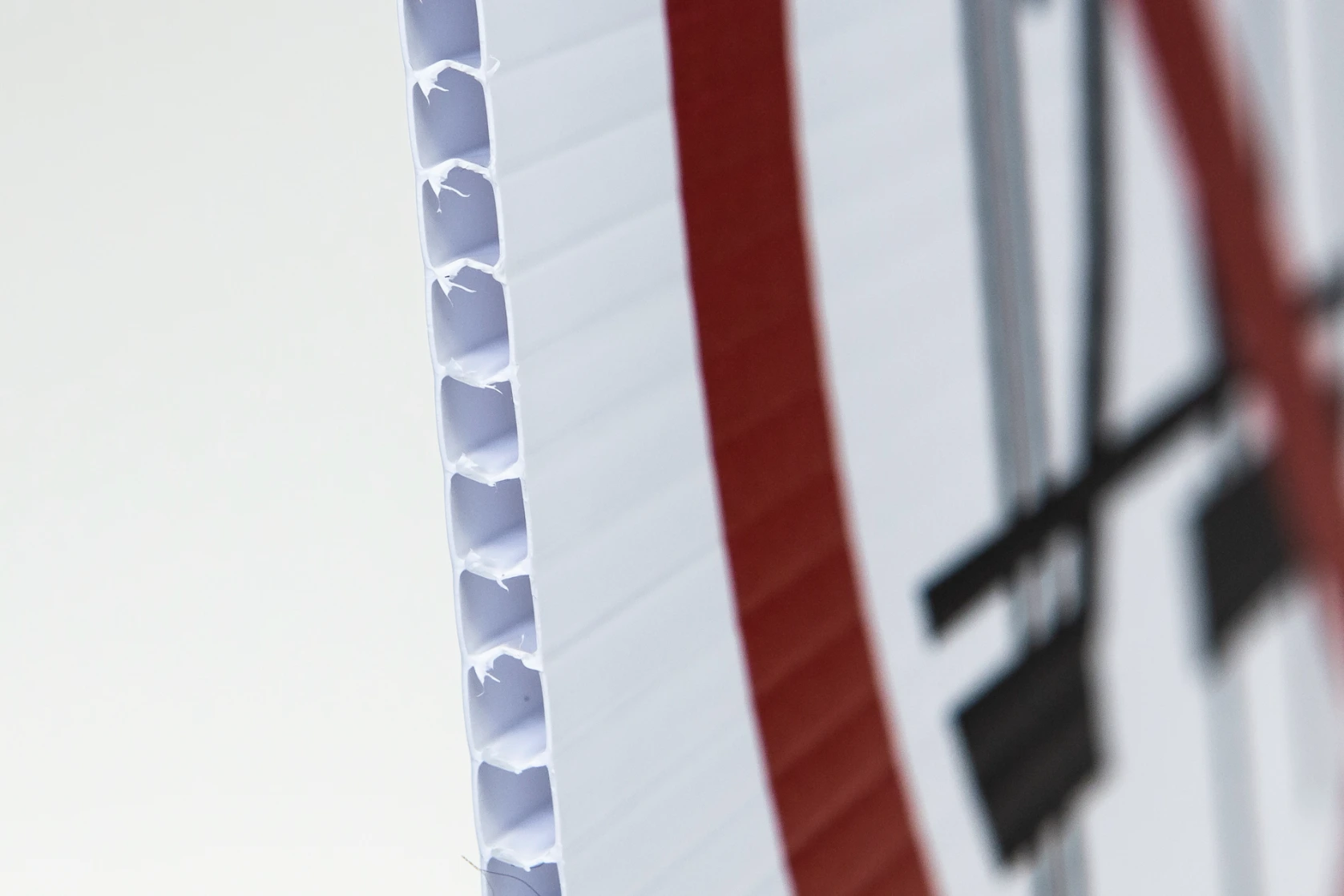
Corriboard
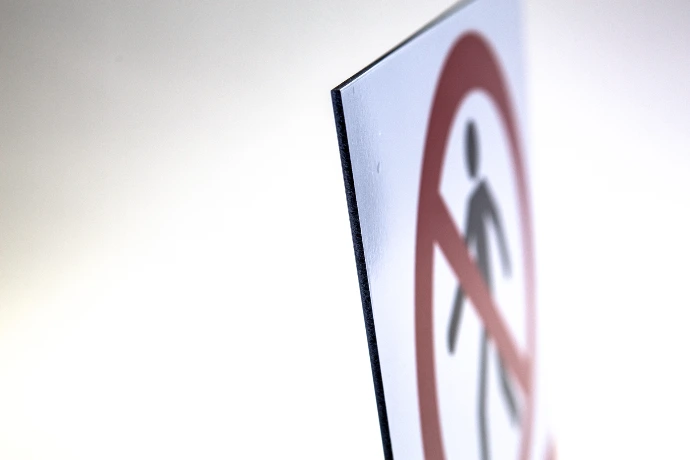
Aluminium Composite
PVC
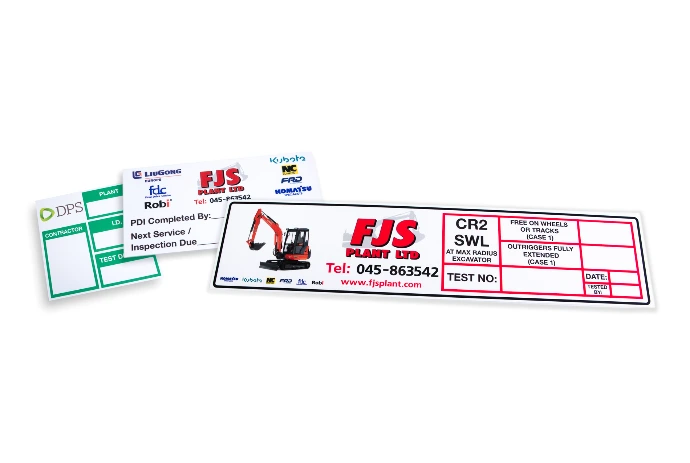
Self-adhesive vinyl
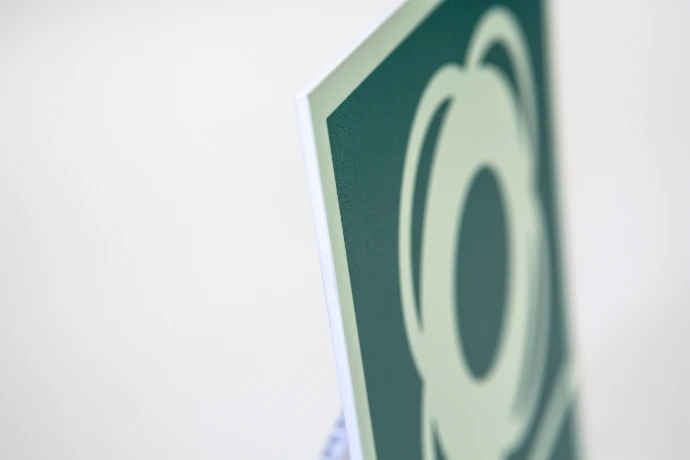
Photoluminescent PVC
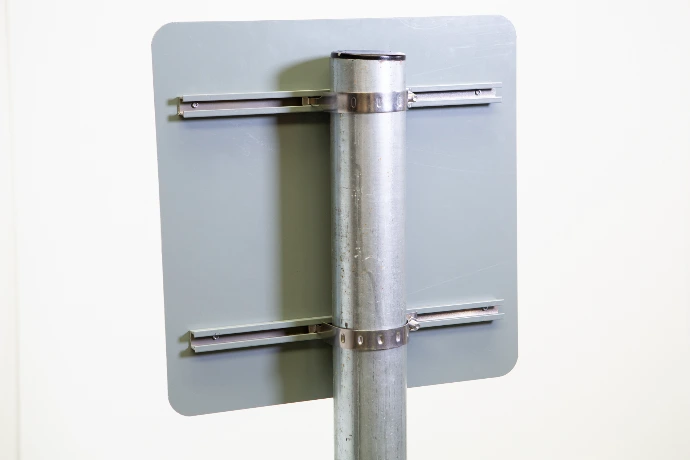
Pole-mounted aluminium plate
Things to Consider When Selecting a Material
If you are unsure which material to choose, consider four key factors: location, duration, exposure and installation method.
1. Where will the sign be installed?
The first consideration is whether your sign will be installed indoors or outdoors.
Indoor signs are generally protected from rain, wind and direct sunlight, giving you a wider choice of materials. Outdoor signs need to withstand changing weather conditions, so a more durable material may be appropriate for permanent installations.
2. How long does the sign need to last?
Consider whether the sign is required for a few weeks or months, or as a permanent installation.
For temporary applications such as construction projects, corriboard can provide a practical and economical solution. For permanent installations, aluminium composite or PVC may be more appropriate depending on the location.
3. What conditions will the sign be exposed to?
Think about the environment surrounding the sign. Will it be exposed to rain, sunlight, wind, frequent cleaning, machinery or regular handling?
A sign installed outdoors or in a busy industrial environment will require a more robust material than a sign installed inside an office or corridor.
4. How will the sign be installed?
The mounting surface and fixing method should also be considered.
Rigid signs can be mechanically fixed to suitable flat surfaces, while self-adhesive vinyl can be applied directly to suitable smooth or curved surfaces. Where a sign needs to be positioned away from a wall or building, a pole-mounted aluminium plate may be more suitable.
Which Material Should I Choose?
As a general guide:
- For temporary construction signage: Choose corriboard for a lightweight and economical option.
- For permanent outdoor signage: Choose aluminium composite for a durable, rigid sign designed for long-term use.
- For permanent indoor signage: Choose PVC where a lightweight rigid sign is required.
- For machinery, vehicles or curved surfaces: Choose self-adhesive vinyl where a flexible, directly applied sign is more practical.
- For emergency and low-light applications: Choose photoluminescent PVC where additional visibility in reduced lighting is required.
- For signs mounted on poles: Choose a pole-mounted aluminium plate with the integrated channel and brackets.
If you are still unsure which material is right for your application, get in touch with us and we can help you choose the most suitable option.